One interface where a city can answer what to build, what it costs, what it returns, what infrastructure it requires, and what the tradeoffs are — before the RFP goes out.
Walk into council
with the answers,
not the questions.
Verified due diligence · Design & programming concepts · Fiscal modeling · Capital structure — one source-traceable platform that travels with the City's RFP.
ZMunicipal™ is the pre-development brain a sophisticated developer would assemble before bidding — built first, on the city's side of the table. Zoning and entitlements confirmed to primary source. Three design and programming concepts the city can stand behind. Live fiscal stress tests council can run in the room. A capital stack with enabling authorities cited. Packaged so the RFP goes out with the city already ahead of it.
Developed by licensed architects and planners with active municipal project experience.
The due diligence behind every deliverable.
Before we show you the platform, here's the work that goes into every engagement.
Every ZMunicipal™ engagement runs a structured pre-development due diligence pass against the parcel — the same items a developer's counsel and capital partner will ask about in week one of an RFP response. Surfacing them before you go to market is what allows the City to set the terms instead of react to them.
Each item is traced to a primary source — code section, recorded document, utility confirmation, or staff correspondence — and indexed in the package appendix so counsel and council can verify line by line.
Regulatory + Entitlement
- Base zoning district + overlays
- Form-based code / transect designation
- Permitted, conditional, and prohibited uses
- Administrative vs. Council approval path
- Special event / activation overlays
- Non-conformance and grandfather analysis
Physical Site + Buildable Envelope
- APN, legal description, parcel boundaries
- Gross site area + net buildable area
- Setbacks, build-to lines, frontage requirements
- Maximum height + floor count
- FAR, lot coverage, residential density caps
- Parking, loading, and bicycle requirements
Title, Plat + Encumbrances
- Title commitment review
- Recorded easements (utility, access, drainage)
- Plat conditions + replat requirements
- Deed restrictions + reverter clauses
- Outstanding liens, deeds of trust, tax status
- Right-of-way + abandonment opportunities
Infrastructure + Utilities
- Water + sewer service + capacity confirmation
- Storm drainage + retention requirements
- Electric, gas, fiber service + relocation needs
- Transportation + transit adjacency
- Curb cut, access, and circulation feasibility
- Utility relocation sequencing + cost order-of-magnitude
Building Code + Life Safety
- Adopted IBC edition + local amendments
- Construction type implications by height/use
- Fire access, hydrant, and standpipe requirements
- Accessibility (ADA / ANSI) compliance path
- Energy code + sustainability mandates
- Mid-rise + high-rise threshold triggers
Public Process + Political
- Required hearings + notification radius
- Council priorities + adopted plan alignment
- Neighborhood + downtown association posture
- Historic, design review, or DRB triggers
- Likely community concerns + mitigation framing
- Sequencing relative to council calendar
An Economic Development director shouldn't be expected to carry every easement, code edition, and overlay in their head — but the package they hand to council should answer those questions before a developer, attorney, or constituent asks them. That's the work.
A platform — not a report — your city owns and runs the conversation with.
ZMunicipal™ sits on the city's side of the table — one source-verified platform the Office of Economic Development owns, hands upward to council, and carries into the RFP. The five-step process is shown in the next section.
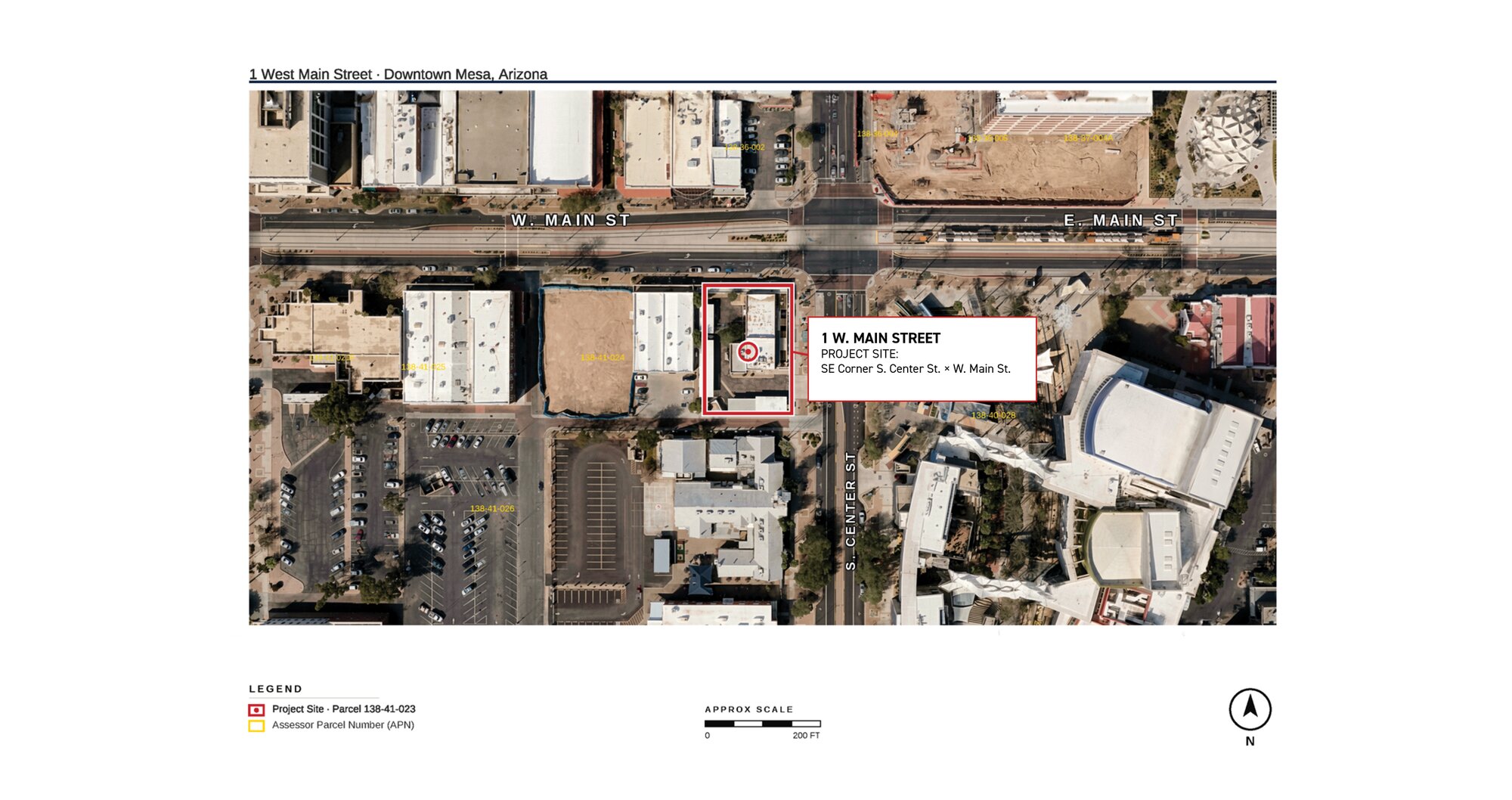
The Office of Urban Transformation is effectively your pilot client.
The 1 West Main work is not just a project. It is proof that a municipality can:
- Evaluate multiple scenarios.
- Understand economics.
- Understand urban design.
- Understand community outcomes.
Control the narrative before a developer does.
Verified zoning and entitlement path — no calls back to planning to double-check. Confirmed financing eligibility: GPLET, Opportunity Zone, P3, ground lease. Obstacles identified before they surface in a public meeting.
A document that reads like a staff report.
Not a pitch deck. Clear identification of what the City needs to resolve before issuing an RFQ or RFP. Fiscal impact framed at multiple development intensities — so council can act with confidence and constituents can see the math.
Specificity attracts better proposals.
Site constraints and opportunities documented before the City goes to market. Design concepts that anchor a vision without over-committing the City. Capital tools surfaced so qualified developers know what's on the table — and price accordingly.
Verified. Traceable. Defensible.
Every designation, citation, and figure traces to a primary source. The city and its counsel can confirm it line by line — not just read it.
Written so staff can stand in front of a city manager or council member and explain why every conclusion is credible — not a study that sits on a shelf.
Assumptions are adjustable. Council, counsel, and staff stress-test fiscal impact in real time instead of trusting a fixed pro-forma.
Every concept maps to the city's adopted general plan, subarea plans, and council priorities — so redevelopment reads as plan-anticipated, not discretionary.
The package is built to the evidentiary standard a council, its attorneys, and its residents expect.
Not brokerage. Not a traditional planning consultancy. Not a development pitch. ZMunicipal™ has no transaction to move forward — the analysis is written to help the city make a better decision, full stop.
A verified site intelligence package — without a six-month consultant engagement.
Five steps. One source-verified platform the Office of Economic Development can hand to a city manager, brief to council, and carry into an RFQ — built on the same depth of analysis a developer's counsel and capital partner will run in week one, surfaced before the City goes to market.
You provide the parcel — APN, address, and relevant background (current encumbrances, prior plans, political context). That's it.
We trace every zoning standard, overlay, and transect requirement to primary source code text. We flag conflicts and identify what requires Council action versus administrative approval.
Real massing concepts — not stock imagery. Sized against actual FBC standards, set within your city's design character requirements. Suitable for council presentations and community engagement.
We map the parcel against every applicable public financing mechanism — GPLET, TIF/TID, Opportunity Zones, NMTC, P3 structures, ground lease, municipal bond eligibility — and identify which tools the City controls.
A 60–80 page council-format package, a live fiscal model with adjustable assumptions, and a fully indexed primary-source appendix — owned by the City in perpetuity and carried directly into the RFP.
The difference between ZMunicipal™ and a traditional pre-development consultant isn't just speed or cost — it's that we don't have a development deal to sell you. Our analysis is written to help your city make a better decision, not to move a transaction forward.
Three ways to deploy the platform.
All three tiers start with the same due diligence foundation — they differ in what gets built on top. Each engagement is scoped to where the City is in its process — from an internal council-case package to a full RFP-integrated identity platform. Ranges are starting points, not hard lines; final scope is set after a short conversation about timing, council priorities, and how the RFP is being structured.
Foundation Package
An internal platform the City uses to build the council case for the RFP.
- Site and regulatory analysis
- Zoning and entitlement confirmation
- Market positioning
- 2–3 design + programming concepts
Full Platform
A platform the City shares with council and prospective developers.
- Everything in Foundation
- Financial modeling
- Capital structure options
- Interactive data environment with live toggles
RFP-Integrated Strategic Platform
A single-source intelligence tool that travels with the RFP — developers arrive pre-informed, pre-inspired, and aligned to the City's vision.
- Everything in Full Platform
- Strategic marketing + identity layer
- Programming, amenity, and place-identity strategy
- Design direction packaged inside the RFP
Engagements are scoped after an initial conversation — once we understand the parcel, the council calendar, and how the RFP is being structured. Depth of due diligence and design work drives timeline, not the other way around.
Compliant. Fast. Already vetted.
Each engagement tier above can be executed under the procurement pathways below — direct contract today, cooperative vehicle as scope grows.
Most Arizona cities authorize direct award up to roughly $50K–$100K without a competitive bid — which covers Foundation and Full Platform engagements today, with no cooperative vehicle required.
Most cities have strict rules about how they spend money. Before hiring anyone, they typically have to run a formal bid process — collecting quotes, evaluating vendors, getting approvals. That process can take months and creates real friction, especially for something new like ZFramework™.
Cooperative purchasing vehicles solve that problem. A lead agency runs one competitive bid process, awards a contract, and then makes that contract available to any member city in the country. When a city wants to engage a vendor already on that contract, they skip the bid process entirely — it's already been done. The engagement is compliant, fast, and requires minimal internal paperwork.
ZFramework™ is pursuing contract award through the cooperative purchasing programs listed at right — each widely accepted by Arizona municipalities.
- NASPO ValuePoint
Administered through the Arizona Department of Administration; available to all Arizona cities and counties as a participating state member.
- OMNIA Partners (Public Sector)
The nation's largest cooperative purchasing organization for public agencies; professional services category.
- Sourcewell
Nationally recognized cooperative authority; actively recruits new vendor categories and accessible to smaller platforms.
- TIPS (The Interlocal Purchasing System)
Interlocal agreement-based cooperative accepted by Arizona jurisdictions for professional and consulting services.
Most ZMunicipal™ engagements will fall below standard municipal small-purchase thresholds, allowing cities to contract directly without a cooperative vehicle.
Cooperative contract status removes the procurement ceiling entirely and signals to city attorneys and procurement officers that ZFramework™ has already passed a competitive vetting process.
One call. Thirty minutes. A specific scope.
A scoping conversation — not a pitch. We walk a candidate parcel, the council calendar, and the procurement vehicle the City wants to use, and leave with a one-page memo on whether a ZMunicipal™ engagement is the right fit and how it would be structured.
- · Candidate parcel(s) and council priorities
- · Procurement pathway (cooperative, on-call, sole source, RFQ)
- · Scope, depth of due diligence, and deliverable format
- · Cost recovery and funding source options
- · Realistic timing against the City's calendar
The window for city-led development is open. But it requires getting to the table first.
Cities that arrive at the table with their own verified analysis set the terms — before the RFQ goes out, before a developer frames the deal, before council asks why nobody saw it coming.
- Shovel-ready starts before the developer shows up.
- A pre-positioned city gets better proposals.
- Council confidence is proportional to staff answers.